
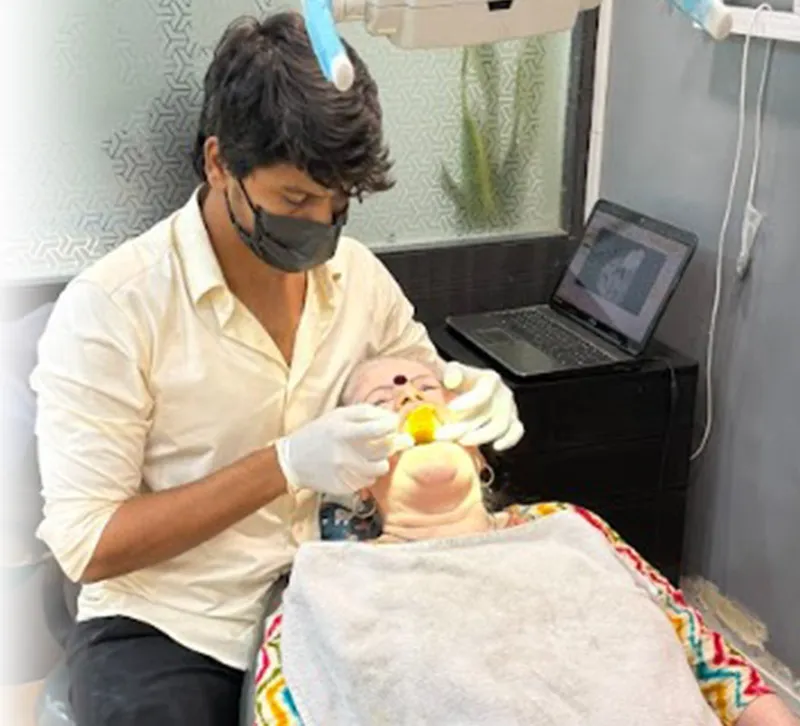
More adults in Pune are straightening their teeth than ever before, often because something has bothered them for years: crowding at the front, a gap, or a bite that does not feel right. The first question is usually “aligners or braces?” This guide explains how they differ, what the evidence says, and how to decide with your orthodontist.
How each one works
Fixed braces
Small brackets are glued to each tooth and joined by a wire. The wire applies gentle, steady pressure that moves the teeth over time. Brackets can be metal or tooth-coloured ceramic. Fixed braces typically stay on for one to two years, with adjustment visits every six to eight weeks (NHS).
Clear aligners
A series of thin, clear plastic trays is made from a digital scan of your teeth. Each set moves the teeth a small step; you change to the next set as your plan advises, often every one to two weeks. You take them out to eat, drink anything other than water, and brush.
What the evidence says
A systematic review that compared the two found that both were effective at treating crooked teeth. Aligners had an advantage for some simpler, segment-by-segment movements and, in the studies reviewed, a shorter treatment time. Braces were more effective at getting the back teeth to meet properly, controlling root angle (torque) and holding the result (Ke et al., 2019).
In practice, this means many mild to moderate cases can be treated well with either. More complex bites, large rotations or big changes to how the jaws meet are often better suited to braces. Aligner systems keep improving, so your orthodontist's assessment of your own teeth matters more than any general rule.
Side by side
| Clear aligners | Fixed braces | |
|---|---|---|
| Look | Nearly invisible | Visible (less so with ceramic brackets) |
| Removable | Yes, for eating and cleaning | No |
| Depends on you wearing them | Yes, for the hours your plan says | No, they work all the time |
| Eating | No food restrictions while trays are out | Avoid hard, sticky and chewy food |
| Cleaning | Brush normally; clean the trays | Brush carefully around brackets; interdental brushes |
| Comfort | Pressure for a day or two with each new set | Soreness for a few days after fitting and adjustments |
| Best for | Mild to moderate crowding, gaps, some bite problems | Most cases, including complex movements |
| Retainers afterwards | Yes | Yes |
The discipline question
The biggest practical difference is who is in charge. Braces work every hour of the day whether you think about them or not. Aligners only move teeth while they are in your mouth. Leave them out for long stretches, at a wedding, on a long trip, or simply because you forget after lunch, and the teeth stop moving to plan. The next set may then not fit, and treatment takes longer.
Be honest with yourself about your routine. If you snack often through the day, every snack means taking the trays out, brushing, and putting them back. Some people find that easy; others find braces simpler because there is nothing to remember.
Living with each one
- Braces: brush in the morning, at night and after meals, use interdental brushes around and under the wire, and avoid sugary drinks and sticky or hard food that can break brackets (NHS).
- Aligners: take them out to eat or drink anything but water, brush before putting them back, clean the trays as shown, and keep them in their case when they are out.
- Both: keep up your regular dental check-ups during treatment, and contact your orthodontist if a bracket breaks, a tray cracks, or your gums are very sore or swollen.
Retainers: the part people forget
When treatment ends, teeth tend to drift back towards where they started. This is called relapse, and it is why retainers are needed after braces (Martin et al., 2023). The same applies after aligner treatment. A retainer can be a thin wire bonded behind the front teeth, a removable clear tray, or both. Your orthodontist will tell you how long and how often to wear it (NHS). Budget and plan for retainers from the start.
How to decide
- What needs to move? Ask your orthodontist whether your case is simple, moderate or complex, and which option gives the more predictable result for you.
- How much does appearance matter during treatment? For many working adults, the near-invisibility of aligners is the main reason to choose them.
- Will you wear aligners as instructed? If not, braces may be the better choice.
- What is included? Ask about the number of aligners or visits, refinements, and retainers.
Frequently asked questions
Are aligners as good as braces?
+
For many mild to moderate cases, both work well. A review found braces were better at some complex movements and at settling the bite, while aligners suited simpler movements. Your orthodontist advises which is more predictable for your teeth.
Are aligners faster than braces?
+
In the studies reviewed, aligner treatment was shorter on average, but those cases tended to be simpler. Your own timeline depends on how much your teeth need to move, and on wearing the aligners as instructed.
Can adults get braces or aligners?
+
Yes. Adults can have either, as long as the teeth and gums are healthy. Any gum problems are treated first.
Do aligners hurt?
+
Most people feel pressure or mild soreness for a day or two with each new set, as the teeth start to move. It usually settles quickly.
Do I need a retainer after aligners?
+
Yes. Teeth tend to drift back after any orthodontic treatment, so retainers are needed after both aligners and braces. Your orthodontist will tell you how long to wear them.
Sources
- NHS: Braces (accessed 15 October 2026)
- Ke, Zhu & Zhu (2019), A comparison of treatment effectiveness between clear aligner and fixed appliance therapies, BMC Oral Health 19:24 (accessed 15 October 2026)
- Martin et al. (2023), Retention procedures for stabilising tooth position after treatment with orthodontic braces, Cochrane Database Syst Rev CD002283 (accessed 15 October 2026)
This article is general information, not a diagnosis or treatment plan. What suits you depends on an examination at the clinic, and every treatment plan and cost is explained before treatment begins.
More on clear aligners & braces · all articles