
“Every six months” is the rule most of us grew up with. In reality, some people need to come more often and some less. Many people in Pune only see a dentist when something hurts, by which point a small problem has often become a bigger one. This guide explains how often you should go, what actually happens at a check-up, and why it is worth the time.
How often should you go?
UK guidance from NICE recommends that the interval between check-ups is set for each person, based on their oral health and their risk of future problems (NICE):
| Shortest interval | Longest interval | |
|---|---|---|
| Adults (18 and over) | 3 months | 24 months |
| Children and teenagers (under 18) | 3 months | 12 months |
In practice, people with healthy teeth and gums and a low risk of problems may only need a check-up every 12 to 24 months; people with more problems need to come more often (NHS).
Things your dentist may weigh when deciding include your history of decay and fillings, gum health, how often you have sugary snacks or drinks, smoking or chewing tobacco, general health conditions such as diabetes, and whether you have braces, aligners or implants.
What happens at a check-up
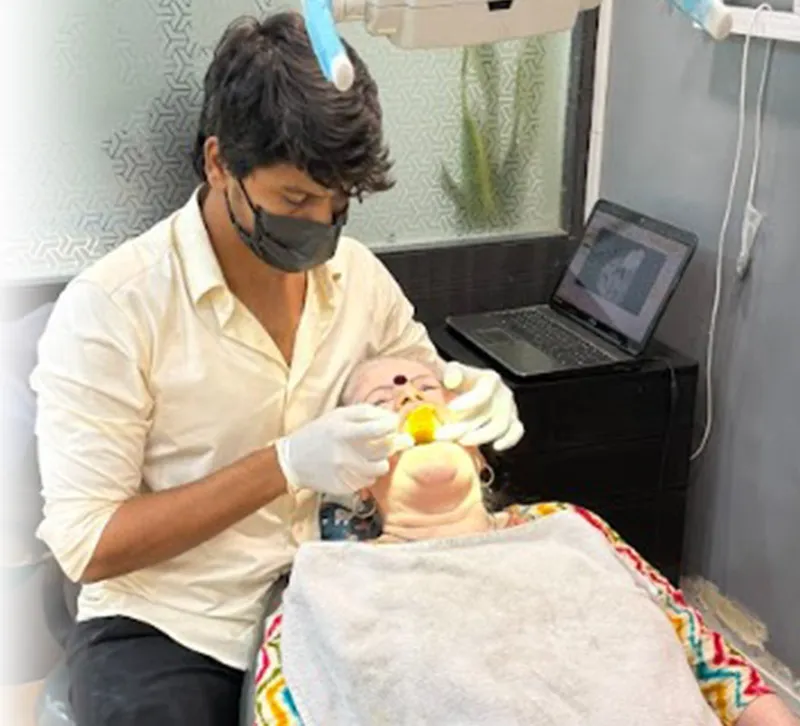
At each check-up, your dentist should (NHS):
- examine your teeth, gums and mouth, including the tongue, cheeks and throat, not just the teeth;
- ask about your general health, medicines and any problems since your last visit;
- give advice on diet, smoking, alcohol and cleaning habits;
- agree a date for your next visit.
Checking the whole mouth matters. Your dentist looks for decay, worn or broken fillings, gum pockets, signs of grinding, and any ulcers, white or red patches or lumps that need watching, which is especially important for anyone who uses tobacco.
What to tell your dentist
A check-up works best when your dentist has the full picture. Bring a list of the medicines you take, including blood thinners, diabetes medicines and any for bone health, and mention any new diagnosis since your last visit. Tell your dentist if you are pregnant, if you smoke or chew tobacco, or if anything in your mouth has changed: a sensitive tooth, a gum that bleeds, a sore that has not healed in two weeks, or a lump. Old X-rays from another clinic are useful too.
Cleaning: scale and polish
Even with good brushing, hard tartar builds up, often behind the lower front teeth and around the back teeth. A scale and polish removes plaque and tartar that your brush cannot (NHS). If you have gum disease, you may need deeper cleaning and more frequent visits; see our guide to bleeding gums and gum disease.
X-rays: when and why
X-rays show decay between the teeth, under fillings and at the roots, and the level of bone around the teeth, none of which can be seen by looking. But there is no “one size fits all” schedule. The American Dental Association says how often X-rays are taken should depend on your oral health, age, risk of disease and any symptoms, and encourages dentists and patients to discuss the need for X-rays together (ADA).
Dental X-rays use a small dose, and the ADA notes that dental imaging is a minor contribution to the radiation people receive from all sources. Good practice is to take an X-ray only when it will change a decision, and to keep the dose as low as reasonably achievable. It is fine to ask why an X-ray is being taken. Tell your dentist if you are or might be pregnant.
Children's check-ups
Children should be seen at least once a year, and often more, because decay can progress faster in children's teeth than in adults' (NICE). Check-ups also let the dentist watch how adult teeth are coming in, and spot crowding early. At home, children need help or supervision with brushing until they are at least 7 years old, using a smear of fluoride toothpaste under 3 and a pea-sized amount from 3 to 6 (NHS).
Between visits
- Brush for about two minutes, twice a day, including last thing at night, with a fluoride toothpaste (at least 1,350 ppm fluoride for adults).
- Spit after brushing; do not rinse with water straight away, so the fluoride keeps working.
- Clean between your teeth with floss or interdental brushes.
- Keep sugary food and drinks to mealtimes.
- Do not wait for your next check-up if you notice pain, bleeding gums, a broken tooth or a lump: book sooner.
These steps follow NHS advice on cleaning your teeth.
Why it is worth it
Most dental problems start silently. A small cavity found at a check-up is a quick filling; the same cavity found when it hurts may need a root canal and a crown. Early gum disease can be reversed; advanced gum disease can cost teeth. Regular visits are usually the least expensive dental care you will ever have.
Frequently asked questions
Do I really need a check-up every six months?
+
Not necessarily. Guidance recommends your dentist sets your interval based on your risk: anywhere from 3 months to 2 years for adults. Some people need six-monthly visits; people with very healthy mouths may need fewer.
How often should children see a dentist?
+
At least once a year, and often more, because decay can progress faster in children's teeth. Your dentist will recommend an interval.
Do I need X-rays at every check-up?
+
No. X-rays should be taken when they are likely to change a decision, based on your age, risk and symptoms. Ask your dentist why one is being taken if you are unsure.
What is the difference between a check-up and a cleaning?
+
A check-up is an examination of your teeth, gums and mouth with advice. A cleaning (scale and polish) removes plaque and tartar. They are often done at the same visit.
My teeth do not hurt. Why should I go?
+
Decay and gum disease often cause no pain in the early stages, when they are simplest to treat. By the time they hurt, treatment is usually bigger.
Sources
- NICE (2004), Dental checks: intervals between oral health reviews (CG19) (accessed 15 October 2026)
- NHS: Dental check-ups (accessed 15 October 2026)
- NHS: How to keep your teeth clean (accessed 15 October 2026)
- American Dental Association: X-rays/Radiographs (Oral Health Topics) (accessed 15 October 2026)
- NHS: Dental treatments (bridges, dentures, implants) (accessed 13 October 2026)
This article is general information, not a diagnosis or treatment plan. What suits you depends on an examination at the clinic, and every treatment plan and cost is explained before treatment begins.
More on everyday dental care · all articles