
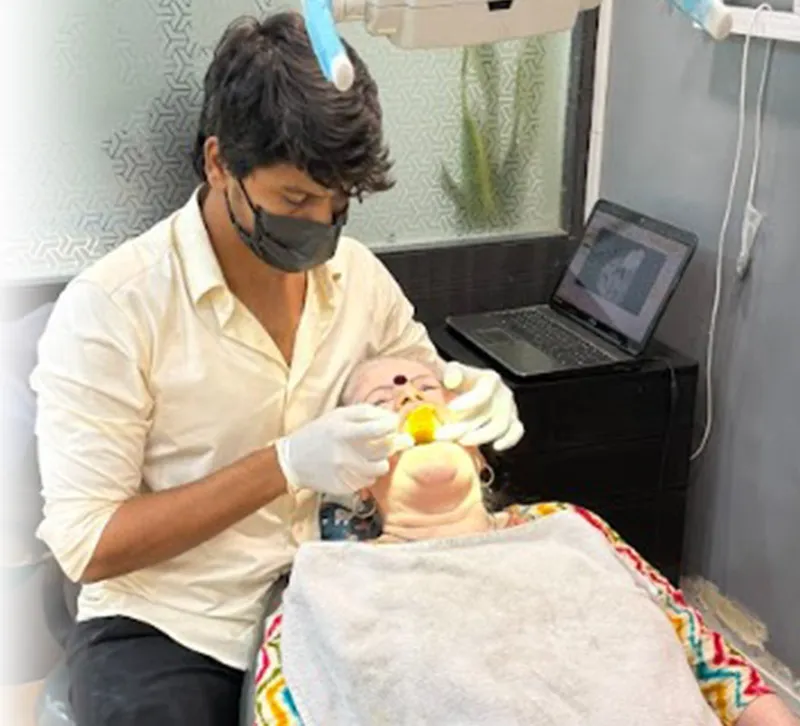
Years of cutting chai, coffee, paan or tobacco, and simply getting older, gradually darken the teeth. Whitening is one of the most requested cosmetic treatments, and there are many ways to try it, from toothpastes to online kits to treatment at a dental clinic. This guide compares the two professional options, explains sensitivity, and sets realistic expectations.
What whitening can and cannot do
Whitening gels contain hydrogen peroxide or carbamide peroxide, which pass into the tooth and lighten stains within it. Stains on the surface, from tea, coffee and tobacco, and stains inside the tooth, including the yellowing that comes with age, can both respond (ADA).
Whitening has limits. It only works on natural teeth: crowns, fillings, veneers and dentures stay the same colour (NHS). If you have a visible filling or crown at the front, it may no longer match after whitening and might need replacing. Some deep stains respond poorly, and veneers or bonding may suit them better.
In-clinic or at home?
| In-clinic whitening | Home kit from your dentist | |
|---|---|---|
| How it works | Gel applied to the teeth at the clinic, sometimes with a light, with your gums protected | Custom-made trays you fill with a milder gel and wear at home |
| Time | Usually one visit of about 1–2 hours | Around 2–6 weeks of regular wear |
| Speed | Faster: a visible change on the day | Gradual |
| Sensitivity | Can be more intense | On average less intense |
| Control | The dentist controls the whole process | You wear the trays as instructed; the dentist checks progress |
The NHS describes in-surgery whitening as quicker (NHS). An updated 2025 review of clinical trials comparing the two found no difference in how many people got sensitivity, but the sensitivity was less intense with home whitening, and colour change was similar or slightly better with the home method. The authors rated the evidence as low quality (de Geus et al., 2025).
Some people combine the two: an in-clinic session to start, then trays at home to finish or to top up later.
How much lighter will my teeth get?
It varies from person to person, and nobody can promise an exact shade. Yellowish staining from tea, coffee and age usually responds well. Staining from certain antibiotics taken in childhood can lighten but may need months of treatment, and white spots, for example from fluorosis, do not disappear, though they may become less noticeable as the rest of the tooth lightens (ADA). A single dark tooth after an old injury needs checking first, as whitening alone may not be the answer. Your dentist records your starting shade on a shade guide, so you can see the change afterwards, and will tell you honestly if whitening is unlikely to give you the result you want.
Why teeth feel sensitive, and what helps
Temporary tooth sensitivity and gum irritation are the most common side effects of whitening. Sensitivity can affect up to two-thirds of people early in treatment, but it is typically mild and short-lived (ADA). A Cochrane review of home whitening products also found mild to moderate sensitivity and gum irritation to be the most common side effects (Hasson et al., 2006).
- Tell your dentist beforehand if your teeth are already sensitive; it may change the method or strength used.
- With home trays, follow the wear time exactly; do not wear them longer or use more gel to speed things up.
- Your dentist may suggest a desensitising toothpaste, or spacing out sessions.
- Avoid very hot or cold food and drink for a day or two if your teeth feel tender.
- If sensitivity is severe or does not settle after treatment, stop and contact your dentist.
Why not a salon or an online kit?
The chemicals used in whitening are strong. The NHS advises that a kit from a dentist, or treatment at a dental surgery, is the safest way to whiten, and that whitening from other places, such as beauty salons, or kits bought online, does not work as well and may harm your teeth and gums (NHS). A dentist also checks first that the darkening is not caused by decay, an old injury or a dying nerve, which whitening would not fix.
Whitening toothpastes mainly remove surface stains with mild abrasives; they will not change the underlying colour much (ADA).
Who should wait
- Anyone aged 17 or under.
- People who are pregnant or breastfeeding.
- Anyone with untreated decay or gum disease: these are treated first.
- People whose front teeth are mostly crowns or veneers, since these will not lighten.
This list follows NHS guidance.
Making the result last
Whitening is not permanent. With your dentist's advice, the effect may last for around three years (NHS), less if you drink a lot of tea or coffee or use tobacco. Your dentist may advise avoiding strongly coloured food and drinks for a short time after treatment. Brush twice a day, and keep up professional cleanings. Your dentist can supply a top-up gel for your trays when needed.
Frequently asked questions
Which is better, in-clinic or home whitening?
+
In-clinic is faster, with a visible change in one visit. Home whitening with custom trays takes a few weeks but, in trials, gave similar results with less intense sensitivity on average. Your dentist recommends the method that suits your teeth and routine.
Is teeth whitening safe?
+
When it is done or supervised by a dentist, after checking your teeth and gums are healthy, it is considered safe. The common side effects are temporary sensitivity and gum irritation. Salon treatments and kits bought online may harm teeth and gums.
How long does whitening last?
+
It is not permanent. With good care the effect may last around three years, less with frequent tea, coffee or tobacco. A top-up with your trays can refresh it.
Will my crowns or fillings whiten too?
+
No. Whitening only works on natural teeth. If a crown or filling at the front no longer matches afterwards, your dentist can discuss replacing it.
Why are my teeth sensitive after whitening?
+
The whitening gel can temporarily irritate the nerve inside the tooth. Sensitivity is usually mild and settles within days of finishing. Tell your dentist if it is severe or lasts.
Sources
- NHS: Teeth whitening (accessed 15 October 2026)
- American Dental Association: Whitening (Oral Health Topics) (accessed 15 October 2026)
- de Geus et al. (2025), At-home vs in-office bleaching: an updated systematic review and meta-analysis, Oper Dent 50(4):E47–E69 (accessed 15 October 2026)
- Hasson, Ismail & Neiva (2006), Home-based chemically-induced whitening of teeth in adults, Cochrane Database Syst Rev CD006202 (accessed 15 October 2026)
This article is general information, not a diagnosis or treatment plan. What suits you depends on an examination at the clinic, and every treatment plan and cost is explained before treatment begins.
More on cosmetic dentistry · all articles