
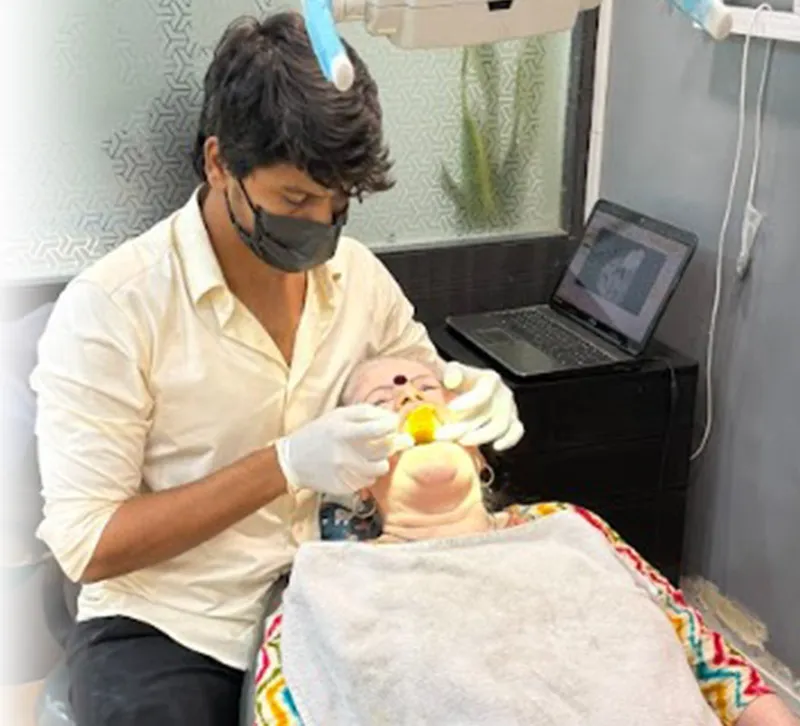
Wisdom teeth are the last teeth to come through, usually in the late teens or early twenties, at the very back of the mouth. Many people have no trouble with them. For others, there is not enough room, and a wisdom tooth comes through at an angle or only part of the way. That is when problems start. This guide explains when removal is needed, what happens on the day and what recovery is like.
When a wisdom tooth needs to come out
A wisdom tooth that is stuck against the tooth in front, or partly covered by gum, is called impacted. It can trap food and bacteria. The NHS lists the problems this can cause (NHS):
- pain and swelling at the back of the mouth
- infection of the gum over the tooth (called pericoronitis)
- food getting stuck, leading to decay in the wisdom tooth or the tooth in front
- gum disease around the back teeth
- a fluid-filled cyst around the tooth, or a dental abscess
A single mild episode of gum infection is not always a reason to remove the tooth. UK guidance from NICE says a first episode of pericoronitis, unless it is severe, should not on its own lead to surgery, but second or later episodes are an appropriate reason (NICE).
When it can stay
If a wisdom tooth is not causing problems, it is usually left in place and checked at your routine visits (NHS). NICE advises against removing disease-free impacted wisdom teeth simply as a precaution. A Cochrane review found there is not enough evidence to say whether symptom-free impacted wisdom teeth should routinely be removed or kept, and that if they are kept, they should be checked regularly (Ghaeminia et al., 2020).
So “my wisdom teeth are coming” is not, by itself, a reason for surgery. An examination and an X-ray show the position of the tooth and whether it is causing harm.
What happens on the day
- 1
Numbing
A local anaesthetic injection numbs the area, so you should not feel pain, only pressure.
- 2
Reaching the tooth
If gum covers the tooth, a small cut is made. The socket may be widened, or the tooth is divided into two or three pieces so it comes out more easily.
- 3
Closing
Dissolvable stitches may be placed. You bite on gauze to stop the bleeding and help a blood clot form.
- 4
Going home
You go home the same day with aftercare advice and any medicines prescribed.
The removal often takes only a few minutes; the NHS says it should take no more than about 40 minutes. You can usually return to normal activities the next day, though a more difficult removal may need one to three days off work (NHS).
Recovery, day by day
Everyone heals differently, and a difficult removal takes longer than a simple one. This is a typical pattern:
| When | What is normal | What helps |
|---|---|---|
| First few hours | Numbness wears off; oozing of blood | Bite on gauze; rest; avoid hot drinks and vigorous rinsing |
| Days 1–2 | Pain, swelling and stiffness peak; possible bruising on the cheek | Painkillers as advised; soft, cool food; no smoking, alcohol, straws or very hot drinks |
| Days 3–4 | Swelling starts to go down; jaw still stiff | Gentle warm salt-water rinses; brush other teeth carefully |
| Days 5–7 | Most people feel much better; soft-food diet easing | Keep the socket clean; avoid nuts, seeds and crunchy food |
| Up to 2 weeks | Some tenderness and stiffness can remain; stitches dissolve | Follow-up visit if advised |
The NHS advises paracetamol or ibuprofen for pain, soft or liquid food until you can chew comfortably, and gently rinsing with mouthwash or warm salt water to keep the wound clean. If it bleeds, press a clean, folded cloth or gauze on the area for at least 10 minutes. Avoid smoking, alcohol and very hot drinks (NHS).
Possible complications
- Dry socket. The blood clot does not form properly or is dislodged, leaving the socket painful. It typically shows up as pain that gets worse a few days after removal, sometimes with a bad taste. It is treatable: call the clinic.
- Infection, which may need antibiotics.
- Numbness or tingling of the tongue, lip or chin, from irritation of a nerve near the root. It usually gets better, but can last weeks or months.
Your dentist will explain the risks for your tooth before the procedure, based on its position on the X-ray.
Wisdom tooth removal at Vinaykia
At our clinic in Somwar Peth, Pune, Dr. Ronak Oswal first checks the tooth's position on an X-ray and tells you whether removal is needed at all. If it is, he explains how it will be removed and how long it may take, and the area is numbed with local anaesthetic. All four wisdom teeth can be removed in one session if needed. If a wisdom tooth suddenly starts hurting, call us: we will try to see you the same day.
Frequently asked questions
Do all wisdom teeth need to be removed?
+
No. A wisdom tooth that is not causing problems is usually left in place and checked at routine visits. Removal is advised when it causes repeated infection, decay, gum disease, a cyst or an abscess.
How long does it take to recover from wisdom tooth removal?
+
Pain and swelling usually start to improve after a day or two. Some tenderness and stiffness can last up to two weeks. Many people return to normal activities the next day; a difficult removal may need one to three days off work.
What is a dry socket?
+
A painful condition where the blood clot in the socket does not form properly or comes away before the gum has healed. It usually shows as pain that gets worse a few days after removal. It is treatable, so contact the clinic.
What can I eat after wisdom tooth removal?
+
Soft or liquid food such as curd, dal, khichdi, soup or mashed vegetables, not too hot, until you can chew comfortably. Avoid hard, crunchy food and anything with small bits, such as nuts or seeds, that could get stuck in the wound.
Will I be awake during the removal?
+
Usually yes. A local anaesthetic numbs the area so you should not feel pain, only pressure. Sedation or general anaesthesia is used only for some difficult removals or very anxious patients, sometimes in a hospital setting.
Sources
- NHS: Wisdom tooth removal (accessed 15 October 2026)
- NICE (2000), Guidance on the extraction of wisdom teeth (TA1) (accessed 15 October 2026)
- Ghaeminia et al. (2020), Surgical removal versus retention for the management of asymptomatic disease-free impacted wisdom teeth, Cochrane Database Syst Rev CD003879 (accessed 15 October 2026)
This article is general information, not a diagnosis or treatment plan. What suits you depends on an examination at the clinic, and every treatment plan and cost is explained before treatment begins.
More on wisdom teeth & oral surgery · all articles